Follow the Money: How Odds Movements in Australian Racing Reveal Where the Smart Punters Are Betting
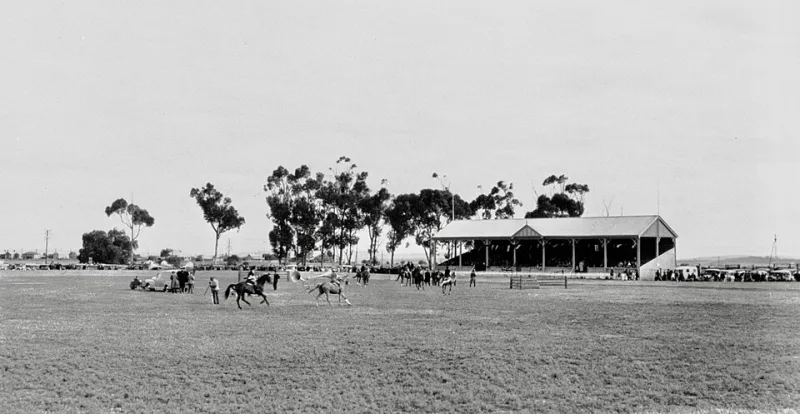
Photo: South Australian State Government photographer, Public domain, via Wikimedia Commons
There's a reason experienced racing punters spend just as much time watching the market as they do studying the form guide. The numbers on the board aren't just prices — they're a live feed of information, updated in real time as money flows in from across the country. If you can decode what those movements mean, you're already ahead of the majority of casual bettors placing a Saturday flutter.
Let's dig into how the market actually works, what separates sharp money from noise, and how you can use this knowledge to make smarter decisions on your next racing bet.
How Odds Are Set and Why They Change
When a bookmaker opens a market for a race at Flemington or Randwick, the initial odds are based on a combination of form analysis, public perception, and commercial positioning. They're not gospel — they're a starting point.
From the moment that market goes live, every bet placed nudges the price. A horse attracting heavy support will shorten. One being ignored or laid off will drift. In a fixed-odds environment, bookmakers adjust their prices to balance their liability. On the tote, the odds are purely a reflection of the pool — the more money on a horse, the lower the dividend.
The key insight here is simple: odds movements are a record of collective betting behaviour. The question is whether that behaviour is meaningful or just noise.
Casual Money vs Sharp Money — What's the Difference?
Not all market movement is created equal. There are two broad forces that shift prices:
Casual punters — the everyday Aussie having a bet on a name they recognise, a tip from a mate, or a horse their trainer put on social media. This money tends to come in gradually, often in smaller amounts, and it frequently targets popular runners or horses with a media presence.
Sharp punters and syndicates — professional betting operations, racing syndicates, and highly experienced individuals who do deep-level form analysis, track work observations, and sometimes have access to information that isn't publicly available. When these players act, they tend to do so quickly, in larger amounts, and with conviction.
The difference in the odds movement they cause is often visible if you're watching closely. A horse drifting from $4.00 to $5.50 in the hour before a race? That's a signal the market doesn't fancy its chances. A horse that opens at $8.00 and firms to $4.50 within 20 minutes of markets opening? That's worth paying serious attention to.
Reading the Moves: What to Watch For
Here are the specific patterns that sharp Aussie punters look for:
Early Market Moves
When bookmakers open a race days in advance, they often do so with relatively small liability limits. A sharp syndicate placing a calculated bet early can cause a significant price move before the market deepens. If you see a horse shorten dramatically in the early markets — particularly for a major carnival race at Caulfield or Eagle Farm — that's often professional money talking.
Late Plunges
One of the most dramatic signals in Australian racing is the late plunge. A horse that sits at a steady price all morning and then gets hammered in the 30 minutes before the race — particularly on the tote — is often the subject of organised betting activity. The 2023 Golden Eagle at Rosehill saw several notable late market moves that directly correlated with race outcomes, and punters who were watching the boards rather than just checking the form had a clear advantage.
Drifters and What They Mean
A horse that opens as a $3.50 favourite and drifts to $5.00 before the jump is sending a message too. Sometimes it's simply that sharper money has gone elsewhere in the race. Other times, it can indicate that people with closer connections to the stable have concerns — whether that's about track conditions, the horse's readiness, or something else entirely.
The Overround and Where It Lives
Every bookmaker builds a margin into their market — the overround. Sharp punters look for horses where the bookmaker's margin appears to have been applied unevenly, creating genuine value. When a horse shortens dramatically, it often means the bookmaker got their initial price wrong and the market is correcting itself. If you got on at the original price, you've captured real value.
Practical Tools for Tracking Market Moves
You don't need to be a quantitative analyst to use this information. A few practical approaches:
- Compare early and current prices: Most Australian bookmakers display their opening price alongside the current price. A quick comparison tells you the direction of movement at a glance.
- Watch the tote fluctuations: The TAB's tote market is a pure reflection of money in the pool. Watching how the win percentage shifts in the final 10 minutes before a race can be genuinely revealing.
- Use multiple bookmakers: Having accounts with several bookmakers lets you spot discrepancies — when one bookie has a horse at $6.00 and another has it at $4.20, the market is telling you something.
- Note the time of movement: Sharp money tends to move early or very late. Middle-of-the-day drifts and shortening are more likely to be casual punter activity.
When to Follow the Market and When to Trust Your Own Form
Here's the honest truth: blindly following market movements isn't a strategy. If you simply back every horse that firms, you'll be chasing your tail — and the bookmaker knows this dynamic well enough to occasionally manufacture false moves.
The sweet spot is combining your own form analysis with market intelligence. If you've done your homework on a race, identified a horse you think is underrated, and then you see the market start to agree with you — that's a powerful confluence. Conversely, if you've backed a runner and it drifts significantly, it's worth asking yourself whether the market knows something you don't.
Australian racing at the top level — the Spring Carnival, the autumn classics, the Queensland winter series — attracts some of the most sophisticated betting activity in the world. Treating the market as a source of information rather than just a price list is one of the most underrated edges available to the everyday punter.
Next time you're looking at a race on a Saturday morning, spend five minutes watching the market move before you place your bet. You might be surprised what the numbers are trying to tell you.